
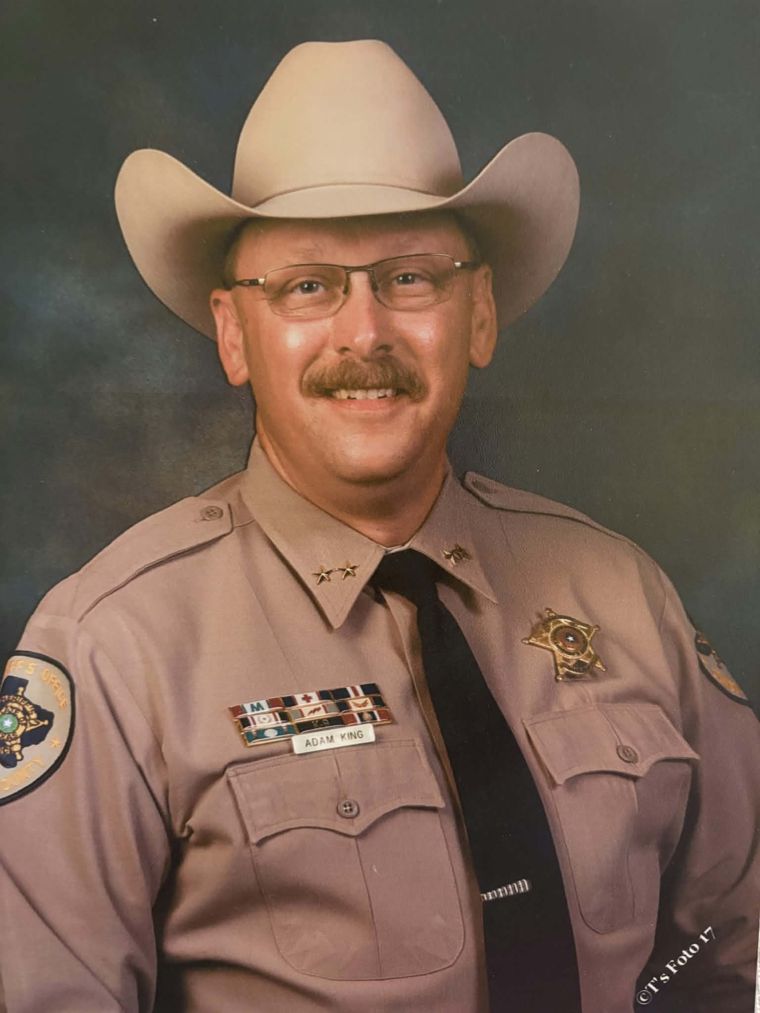
Long before “Sheriff” went in front of his name, Adam King spent more than two decades on one of the most dangerous edges of Texas law enforcement: standing between Johnson County and the drug trade. As commander of the STOP Special Crimes Unit, he built a reputation that, as a 2015 profile put it, sent dealers a simple message — drugs stop here.
The unit that told dealers to stay out
STOP — short for Stop the Offender Program — was Johnson County’s Special Crimes Unit, and for years Adam King was its commander. Its officers went face to face with drug dealers, gang members, and violent offenders, work King has described as genuinely dangerous even for those who go in trained and prepared. The unit’s larger purpose was blunt: make Johnson County a place where the drug trade could not comfortably set up shop. County leaders credited it with doing exactly that — and with building a reputation that reached well into the Dallas–Fort Worth Metroplex.
From a Fort Worth classroom to the front line
King’s path into that work started young. Born and raised in Fort Worth, he first grew interested in narcotics work through a schoolmate’s aunt — a Fort Worth officer who worked narcotics and told stories that stuck with him. After high school he served in the U.S. Army as a military policeman, including drug-interdiction work overseas, before returning to Texas and joining the Cleburne Police Department in 1989 — the same year the multi-county drug task force that would become STOP was taking shape. (More on his military years in The Soldier Before the Sheriff.)
Building a county agency
The early task force pooled the resources of Johnson, Somervell, and Hood counties. When Texas moved the remaining multi-county task forces under state supervision in 2005 — a model King and other local officials found cumbersome — several were dissolved. Rather than let Johnson County’s capability disappear, King helped chart a different course: the county took its share of the task force’s assets and rolled them into a single-county Special Crimes Unit with a mission broader than narcotics alone. Commissioned as a city marshal, King was positioned to lead it and to work alongside agencies up to the DEA.
Meth, gangs, and the long fight
The unit’s work ranged from human trafficking to gang interdiction, but drugs were the bulk of it — and, King noted at the time, methamphetamine was the county’s biggest problem, more than marijuana and far more than heroin. Year over year, the meth houses that once dotted the county grew fewer. It was slow, dangerous, unglamorous work, done mostly out of the headlines. It was also, by the account of the county’s own leaders, one of the most important things Johnson County had done for its families.
“STOP is one of the most important things we’ve done in Johnson County.” — Roger Harmon, then Johnson County Judge (Community Life, 2015)
The lawman before the sheriff
By the time Adam King was elected sheriff in 2016, he had already spent a career doing the hardest parts of the job — the parts that don’t make headlines and don’t come without risk. The STOP years are where much of the discipline, judgment, and sheer persistence people now associate with him were forged. “Drugs stop here” was never just a headline. For more than twenty years, it was his job.
This article draws on “Adam King: Drugs Stop Here,” a 2015 feature in Community Life magazine (story by Matt Smith). Details reflect that reporting and Sheriff King’s public record.