
Most people think of a county jail as an ending — a locked door, a lost year, a life on hold. Sheriff Adam King has spent his years in office proving it can be a beginning instead. Under his leadership, the Johnson County Jail has become a place built not just to hold people, but to change the direction of their lives.
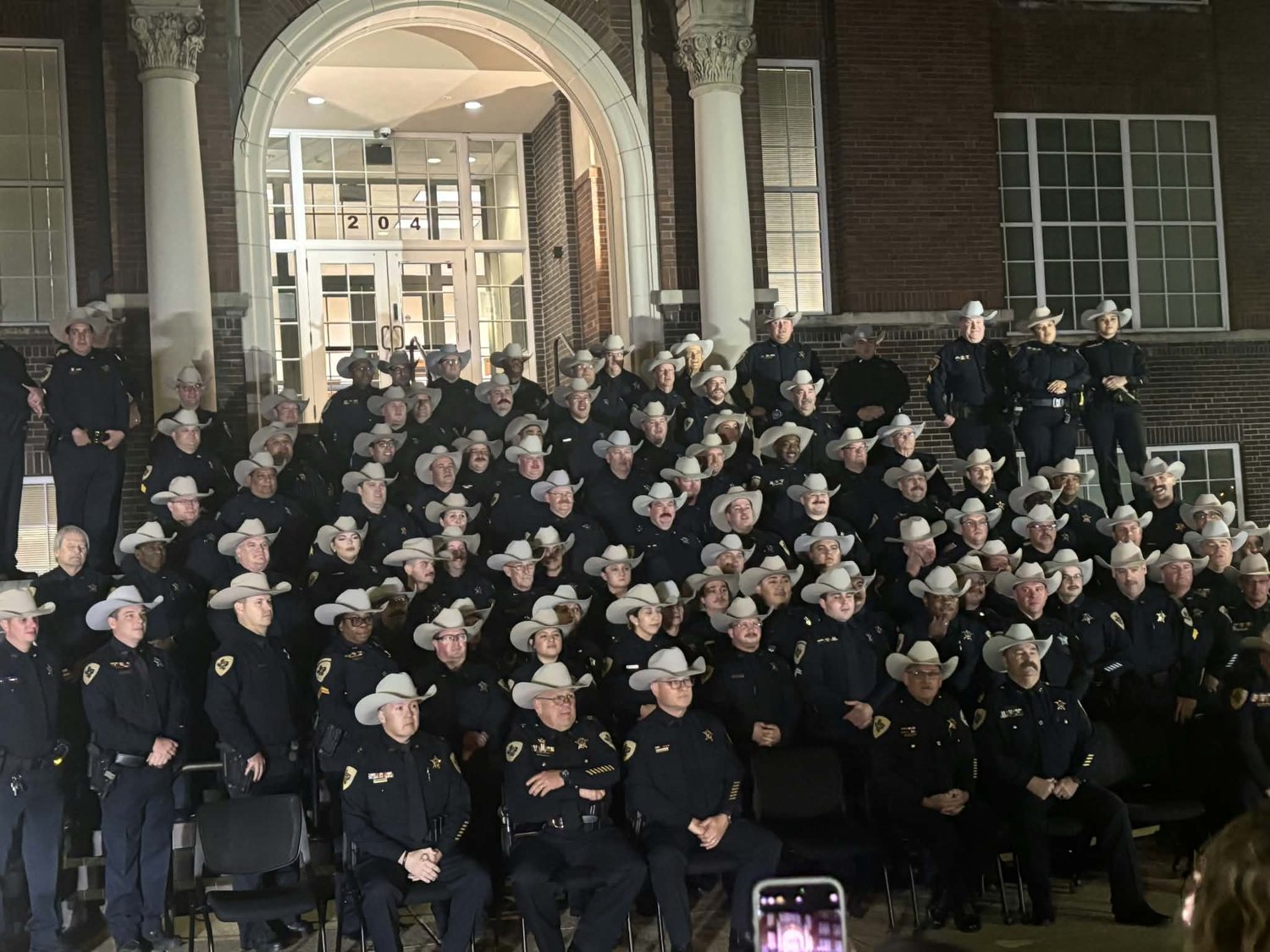
It began with a Christmas lunch
During the height of the COVID-19 pandemic, the county’s courts had all but stopped. People arrested on minor charges could sit for weeks with no hearing, simply because the judicial system had ground to a halt. One of them was a young mother with a small boy waiting at home — cut off from her child with no idea when it would end.
That Christmas Day, Adam and his family prepared a holiday meal and carried it up to the jail. They invited that young mother into a small conference room, sat down with her, and shared Christmas dinner. Adam arranged for her to make a phone call home so she could hear her little boy’s voice on Christmas. It was a simple thing. But watching what it meant to her, Adam saw something bigger: the difference you can make one person at a time, even inside a jail.
A jail ministry that keeps growing
Adam began reaching out to churches across Johnson County, inviting them to help him bring hope to any inmate who wanted it. What started as one family’s Christmas visit grew into a coordinated effort involving dozens of volunteers. Today, at Christmas and again at Easter, churches come into the jail to provide a meal, music, worship, and time to sit and pray with the men and women inside. At Easter, one local congregation brings its entire worship team and spends much of the day there.
The response has been remarkable. At these gatherings, a large number of inmates come forward to be baptized and to begin again. For many of them, it is the first time in a long time that anyone has treated them as a person worth investing in.
“He wanted to take this to all of the inmates who wanted to participate. It just started with seeing the impact you could have, one person at a time.”
The ministry is not a one-weekend-a-year program. Adam built a standing chaplaincy program so that spiritual and personal support is available year-round. Volunteers and chaplains from many different churches now pour into the people in his care, and that steady presence has become part of the culture of the facility. For people who have spent much of their lives being told they are a problem to be managed, that kind of steady attention can be the first crack of light.
Treating mental health as health
Anyone who has worked in law enforcement will tell you the same hard truth: a large share of the people who cycle through a county jail are not hardened criminals. They are people who are off their medication, or who have never been diagnosed and treated at all. Locking them up and releasing them, over and over, helps no one.
Adam decided to treat that reality head-on. He brought a regional mental-health provider on site, setting up an office inside the jail so that inmates struggling with mental illness could actually be seen, evaluated, and connected to care. It is a practical, compassionate approach that addresses the reason many people end up behind bars in the first place — and one that not every jail in Texas has been willing to take on.
Learning a trade, not just serving time
The heart of the turnaround is a simple idea: people are far less likely to come back to jail if they leave with a skill and a way to earn an honest living. Through the Christian Women’s Job Corps, women in the jail learn the practical building blocks of employment — typing, computer skills, résumé writing, and how to handle a job interview.
For the men, and increasingly for everyone, the vocational side keeps expanding. Inmates are already keeping bees and tending hives. Using savings the jail generated, Adam purchased a tractor, and now the facility grows its own fresh produce. A new vocational building is under construction that will expand this training even further, in cooperation with Hill College and other partners, adding hands-on trades such as welding and HVAC.
Bringing the jail home — and making it pay off
Early on, Adam made the decision to bring the jail’s operations back under the direct management of the Sheriff’s Office. It took time and careful planning. He traveled the state, meeting with other Texas sheriffs who ran their own facilities, studying how they did it and what it cost, before making the move.
The results speak for themselves. Bringing operations in-house is estimated to have saved Johnson County several million dollars in the first year alone, and the savings have continued. Because the jail is now well-run and well-regarded, the county has even been able to house inmates from neighboring counties that had run out of space. Those counties pay Johnson County for the beds — generating revenue for local taxpayers while extending the reach of every one of these ministry and training programs to more people who need them.
The proof is in who doesn’t come back
All of it points to a single measure that matters more than any award or headline: are people coming back? In Johnson County, more and more of them are not. Inmates are leaving with vocational skills, with job prospects, with faith, and with people who believe in them — and they are staying out.
Adam would be the first to say he didn’t do this alone. He points to the churches, the chaplains, the mental-health workers, the Christian Women’s Job Corps, and the countless volunteers who have invested themselves in the people inside. But it takes a leader to open those doors, and to keep them open — and to prove, one life at a time, that the people in his custody are worth more than a locked door.
Figures noted as estimates are pending confirmation against county records.
Frequently asked questions
Why did Johnson County take back control of its jail?
Sheriff Adam King said returning the jail to direct county control would be financially and operationally better for taxpayers. It also opened the door to rehabilitation programs a private, for-profit operator had little reason to invest in.
What programs does the Johnson County Jail offer under Sheriff King?
The jail added a year-round chaplaincy program, a volunteer-led jail ministry, on-site mental-health care, and job and vocational training aimed at helping people leave ready to rejoin their communities.
How do the jail’s programs relate to public safety?
The programs are designed to reduce repeat offenses by helping people address the faith, mental-health, and job-readiness needs that can otherwise send them back to jail — a longer-term measure of public safety.